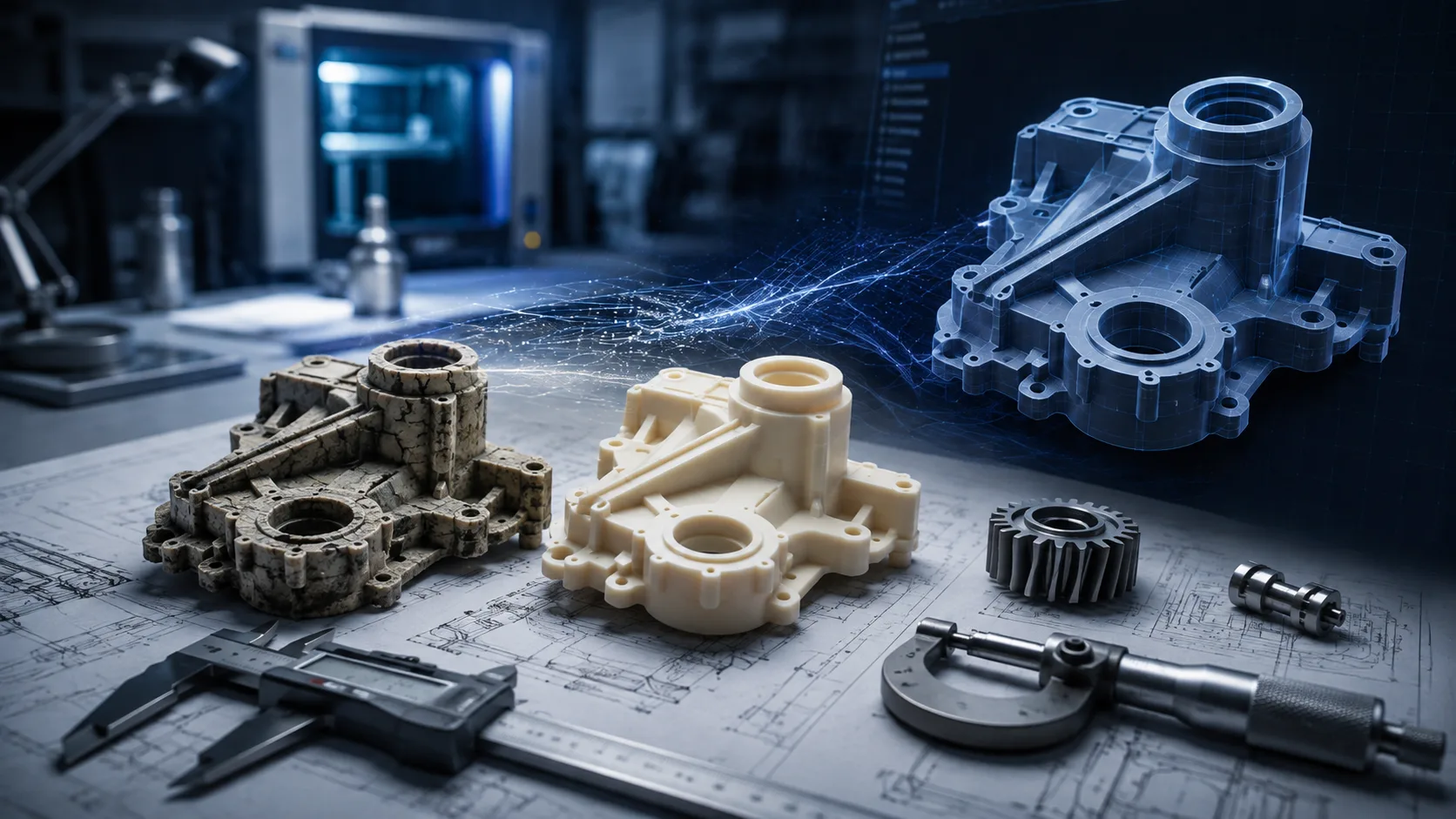
Parts that no longer exist.
We make them again.

Replacement parts · Prototypes · One-offs · Small series. Manufactured in the Czech Republic and shipped across the EU — from a CAD file, drawing, photos or a broken original.

High-detail resin printing · One-offs & short runs · EU shipping · CAD support

Why Traxware Print

The part you need does not have to exist in a catalogue.

A cracked clip, discontinued knob, missing cover or awkward little adapter can make an otherwise perfectly good device unusable. Send us what you know. We will assess whether the part can be reproduced, suggest a suitable material and manufacture a prototype or short run.

We manufacture to the agreed specification. Final suitability for your application must be validated by you.
Services

What we do

What we make

Real examples, by sector

Automotive & classic vehicles

Knobs, blanking plugs, clips, trim pieces, brackets, decorative components, small interior parts.

Learn more →

Caravan & motorhome

Covers, catches, brackets, hinges, adapters, guides, interior fittings and proprietary little parts that are impossible to buy separately.

Learn more →

Machines & equipment

Control elements, stops, guides, covers, spacers, small gears, fixtures and non-safety-critical machine components.

Household appliances

Latches, wheels, knobs, guides, brackets, covers, spacers and replacement mechanisms.

Electronics & smart building

Enclosures, sensor mounts, cable guides, adapters, control-panel parts, DIN-related accessories, smart-home and Loxone installation components.

Learn more →

Dental practices

Non-clinical holders, covers, knobs, organizers and equipment accessories. Not implants, patient-contact parts or regulated medical-device components unless explicitly assessed and agreed.

Laboratory & scientific equipment

Instrument covers, holders, sample-positioning aids, knobs, adapters and bespoke non-critical accessories for older or custom equipment.

Learn more →

Industrial automation

Sensor brackets, optical/electronic instrument mounts, spacers, alignment aids, covers and small custom interfaces for test rigs.

Learn more →

Robotics, R&D & product teams

Proof-of-concept components, housings, actuator/sensor interfaces, ergonomic prototypes and short-run iteration parts.

Professional equipment

Mounts, knobs, battery/accessory adapters, cable guides, covers and discontinued small hardware.

Learn more →

Don't see it? Reach out and let's talk to figure out.

Process

How it works

Show us the problem

Describe what the part does. Upload photos, drawings or CAD files.

Tell us the environment

Heat, UV, water, chemicals, friction, vibration, impact, bending — the use matters.

We review and quote

We suggest a material and manufacturing approach and identify anything we cannot responsibly infer.

You approve the specification

Quantity, material, dimensions/tolerances, finish and price are confirmed before production.

We manufacture & ship

Prototype first if needed, then the requested quantity. EU-wide delivery.

Selected case studies

Selected case studies

Dimensions & tolerances

Dimensions & tolerances

Single-piece size

Up to approximately 210 × 118 × 220 mm

Overall size

Virtually unlimited* — larger parts are manufactured in sections and assembled afterwards.

Typical functional tolerance

Approximately ±0.2 mm, depending on geometry, material and feature orientation.

* Joining method is selected for the application: structural epoxy, specialist adhesive, mechanical fasteners, locating features or a customer-specified method.

FAQ →

Materials

Chosen by behaviour, not brand name

General / ABS-like tough resin

Housings, covers, knobs, general functional parts.

Tough / impact-resistant resin

Components that need more impact resistance or controlled flex.

Heat-resistant resin

Where higher service temperature is required.

Flexible / semi-flex resin

Clips, soft interfaces, compliant components where suitable.

High-detail resin

Visual prototypes, fine geometry, masters and presentation parts.

Material datasheets describe test specimens under controlled conditions. Actual properties of a printed component depend on geometry, orientation, curing, wall thickness, ageing and the real operating environment. Unless explicitly agreed and tested, quoted material values are not a guarantee of the finished part's fitness for a particular application.
Have the part, not the file?

Only have the old part? Good. Even if it is broken.

Send us clear photos and basic dimensions first. If the job looks feasible, we may ask you to send the original component to us in the Czech Republic. Broken fragments can still be useful. Do not send unique or high-value originals before we confirm the job and shipping method.

We measure and recreate suitable parts manually in CAD.

Request a part

Tell us what the part needs to do.

We won't ask which resin you want first. Most customers don't know — and that's fine. Tell us what the part must survive and we'll take it from there.

A. Contact
B. Project
Broken is fine. Please do not ship anything until we confirm.
C. Operating environment
D. Mechanical requirements
E. Appearance
F. Files

This form does not upload files yet. After you submit, an email will open with your answers — please attach your 3D/CAD files (.stl, .obj, .3mf, .step, .stp, .iges, .igs), drawings/documents (.pdf) and photos (.jpg, .jpeg, .png, .webp, .heic) to that email before sending. Suggested limits: 50 MB per file, 200 MB total, 20 files max.

Include a ruler or caliper in at least one photo if scale is otherwise unclear.

G. Safety / regulated use
Examples: braking, steering, lifting people/loads, pressure containment, mains-voltage safety, fire protection, medical/life-support use, food-contact compliance, protective equipment, aviation.
H. Final

See our Privacy Policy.

Thanks — we have the problem, not just the file.

We will review the geometry, use conditions and requested quantity and reply with questions or a quote.

Reference: TP-2026-xxxxx

FAQ

Frequently asked questions

How does working with us work?

1. Tell us what you need

Send us your model, drawings, photographs or simply describe the problem you are trying to solve.

Tell us what the part needs to do, where it will be used and what it needs to withstand. If you have an existing — even broken — original part, let us know.

2. We review the job

We assess whether the part is suitable for our manufacturing process, identify any missing information and recommend a material and manufacturing approach.

Depending on the nature of the project, we will then propose one of two ways of working:

Fixed-price project

For clearly defined parts and manufacturing jobs, we provide a quote covering the agreed scope.

Once you approve the quote and specification, we issue an advance payment request. Work starts once the advance payment has been received.

As a standard arrangement:

50% advance payment → engineering & manufacturing → remaining 50% before dispatch

For smaller jobs, special-order materials or other circumstances, full payment in advance may be required.

Any work outside the agreed scope is discussed and approved before additional costs are incurred.

Prepaid Engineering

Some projects cannot be priced reliably before engineering work begins — particularly reverse engineering, prototypes, incomplete designs or projects where several iterations may be required.

In these cases, we work against an agreed prepaid engineering budget.

You approve and prepay the initial budget, and we use it for CAD work, engineering, prototyping, testing and other agreed activities.

We keep you informed of progress and never exceed the approved budget without your authorization.

If further work is required, you can approve and fund the next engineering stage.

Any unused portion of the prepaid engineering budget will either be credited towards subsequent project stages or refunded, unless otherwise agreed.

Special-order materials, external services and significant manufacturing costs may be charged separately in advance.

3. You approve the final specification

Before final production we confirm, as applicable:

  • geometry and dimensions
  • critical tolerances
  • material
  • quantity
  • surface finish
  • assembly method
  • operating conditions
  • price

Where development or prototyping is involved, you may also be asked to approve a prototype or design revision before final production.

4. We manufacture

Once the specification and required payment are confirmed, we manufacture your parts.

For larger orders or development projects, manufacturing may be divided into agreed milestones.

5. Final payment & shipping

Any outstanding balance is payable before dispatch.

Once payment is received, we ship the parts to you anywhere within the EU.

Simple job? Simple process. Complex problem? Controlled budget.
In either case, you always know what has been approved and how much you have committed before we proceed.

Can you copy a broken part?

Often yes, especially when enough geometry remains to measure or infer the original shape. Send photos before shipping the original.

Do I need an STL file?

No. STL/STEP/3MF helps, but a drawing, dimensions, photos or a physical original may be sufficient for straightforward parts.

Can you guarantee the part will work?

We can manufacture to an agreed geometry/material/specification and provide recommendations. We cannot guarantee fitness for an application we do not control. The customer is responsible for final fit, testing, safety and compliance unless a specific validation scope is separately agreed.

Can you make one piece?

Yes. One-offs and short runs are exactly where additive manufacturing makes sense.

What dimensions and tolerances are you able to manufacture?

Our standard process allows us to manufacture single-piece components up to approximately 210 × 118 × 220 mm.

For larger components, the practical overall size is virtually unlimited*. Large parts can be divided into multiple sections, manufactured separately and assembled afterwards.

Depending on the application, sections may be joined using structural epoxy, specialist adhesives, mechanical fasteners, locating pins, interlocking joints, or a combination of these methods. The joining method is selected according to the required mechanical properties, operating environment and customer specification.

For functional components, our typical dimensional tolerance is approximately ±0.2 mm. Higher accuracy may be achievable for suitable geometries, but should be discussed and validated for the specific application.

As a general guideline:

  • Typical functional wall thickness: 1.0–1.2 mm or more
  • Fine surface details: approximately 0.2–0.3 mm
  • Small holes/features: typically 0.5–0.8 mm or larger
  • Layer height: approximately 0.01–0.20 mm, depending on the required balance between detail, strength and manufacturing time

If your component contains critical dimensions, mating surfaces, bearings, shafts, threads or other precision interfaces, please identify them in your inquiry. We can then design and manufacture the part with the appropriate allowances and tolerances.
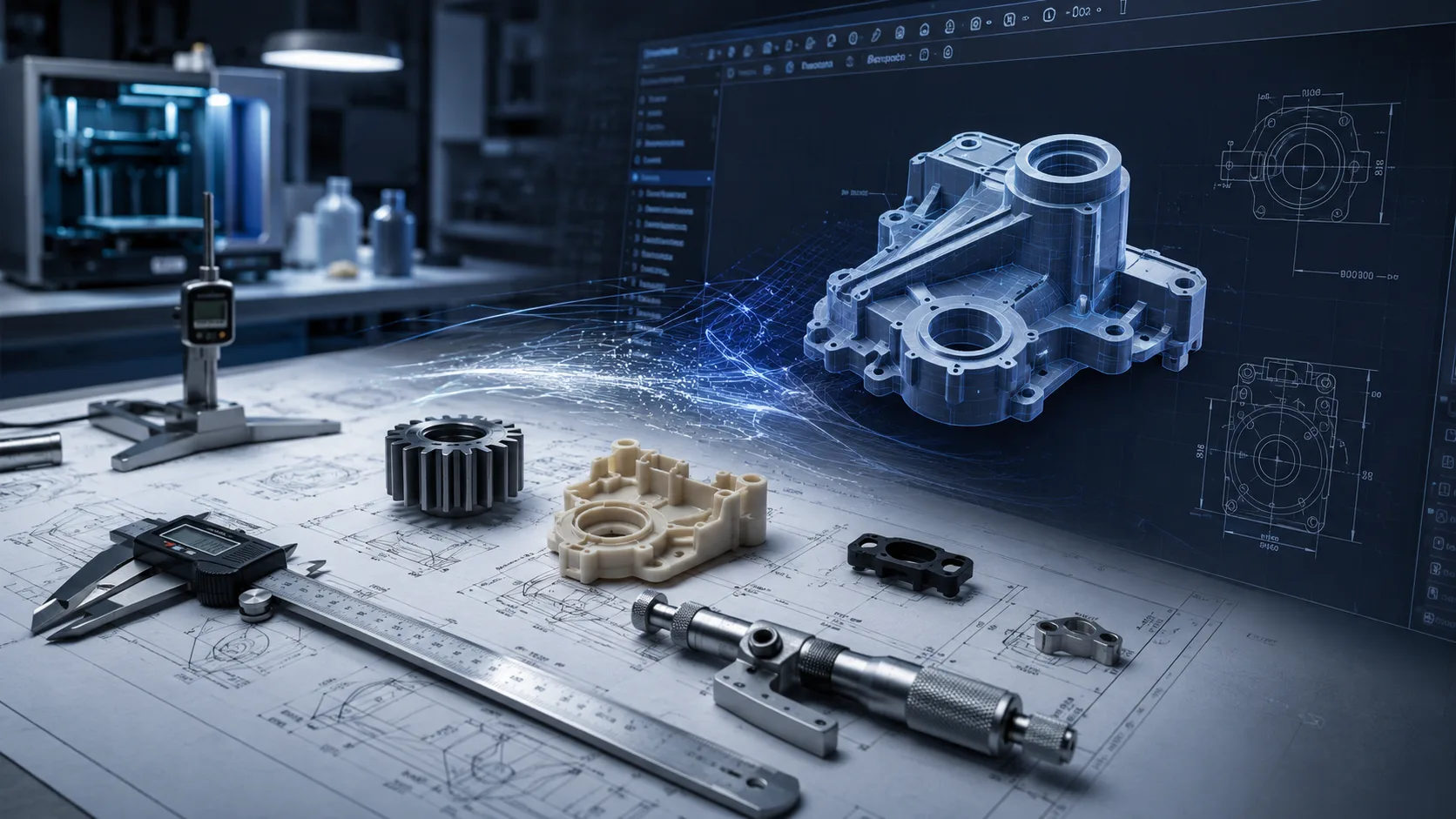
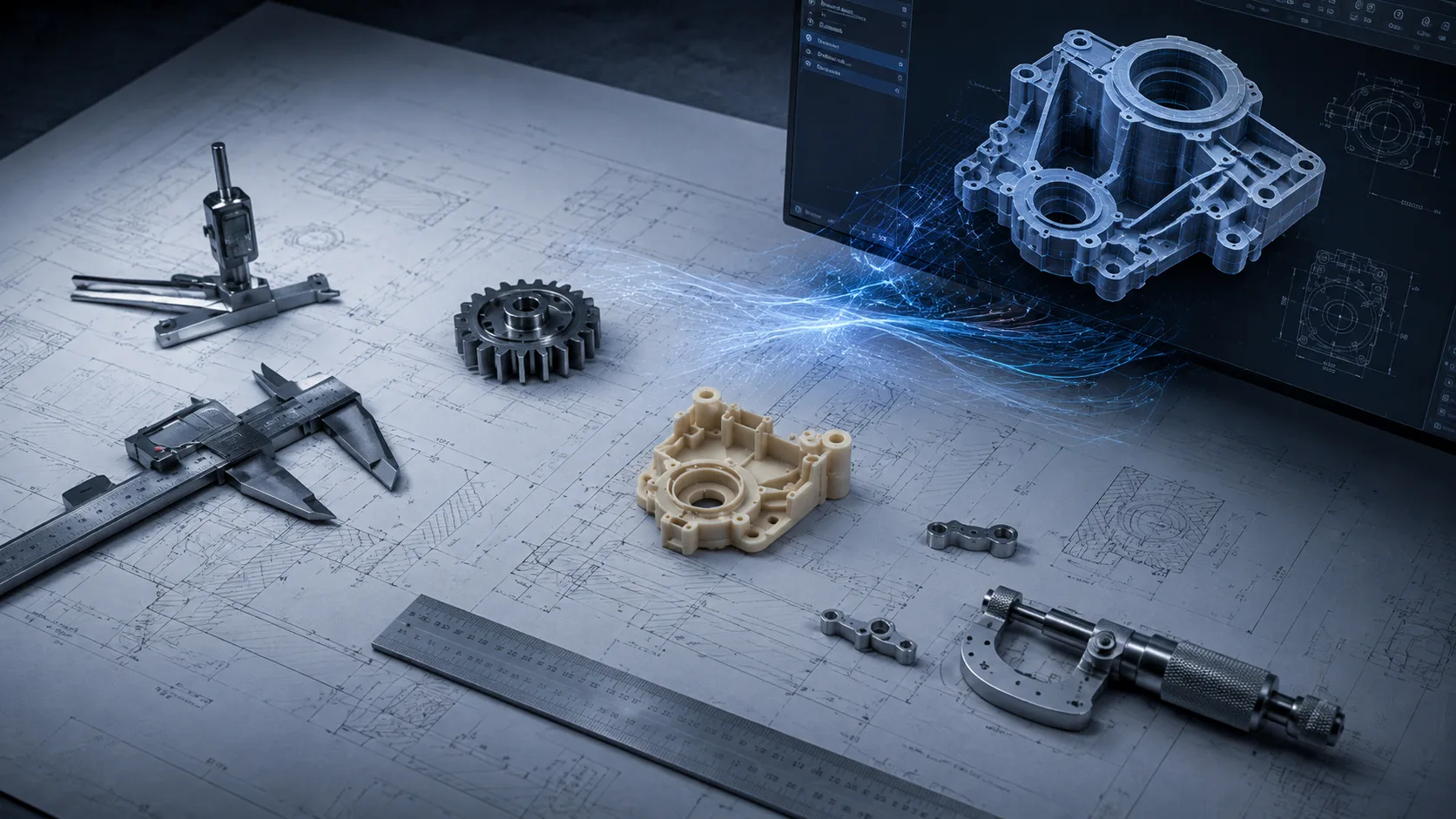
* Large components will not be manufactured as a single monolithic part. They will be manufactured in multiple sections and subsequently assembled. The exact joining method depends on the application, required strength, temperature exposure, chemical environment and customer requirements.

Do you ship outside the Czech Republic?

Yes, across the EU. Shipping cost and method are included in the quote.

Can you make high-temperature or flexible parts?

Often yes. Tell us the real temperature range, loads and environment. We will recommend an available resin if the application is suitable.

Can you print a safety-critical component?

Do not assume so. Safety-critical or regulated applications require explicit disclosure and manual review and may be refused.

Will I receive the CAD/source file?

Not automatically. Physical parts are the default deliverable. CAD/source/production files are included only when explicitly listed in the quote.